- Categoryref
- Black
- Opacity Classref
- Opaque
- ASTM/ISO Refsref
- ASTM D4303
- Lightfastnessref
- I (Excellent)
- Oil Absorptionref
- 15–25 g/100g
background
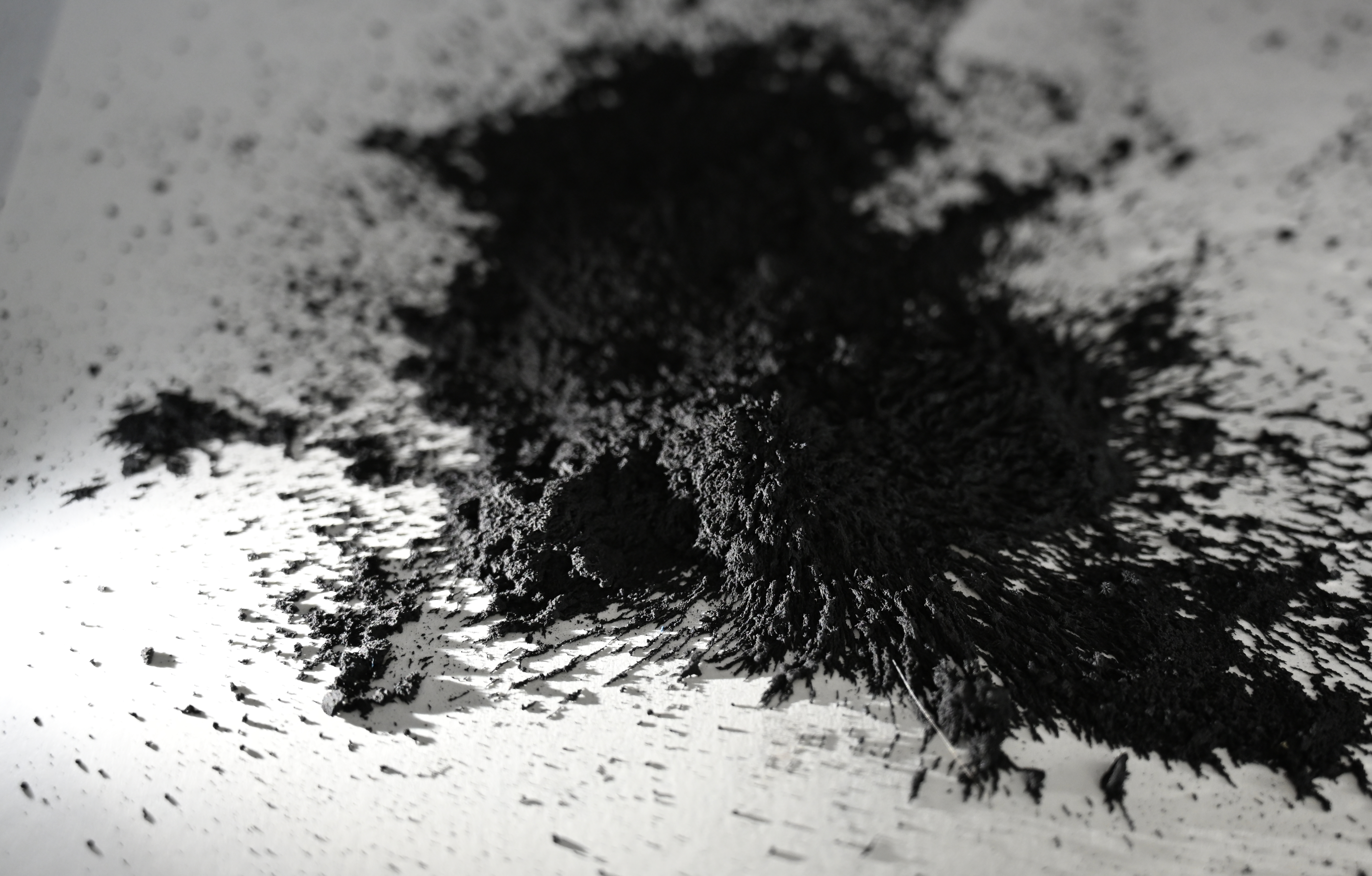
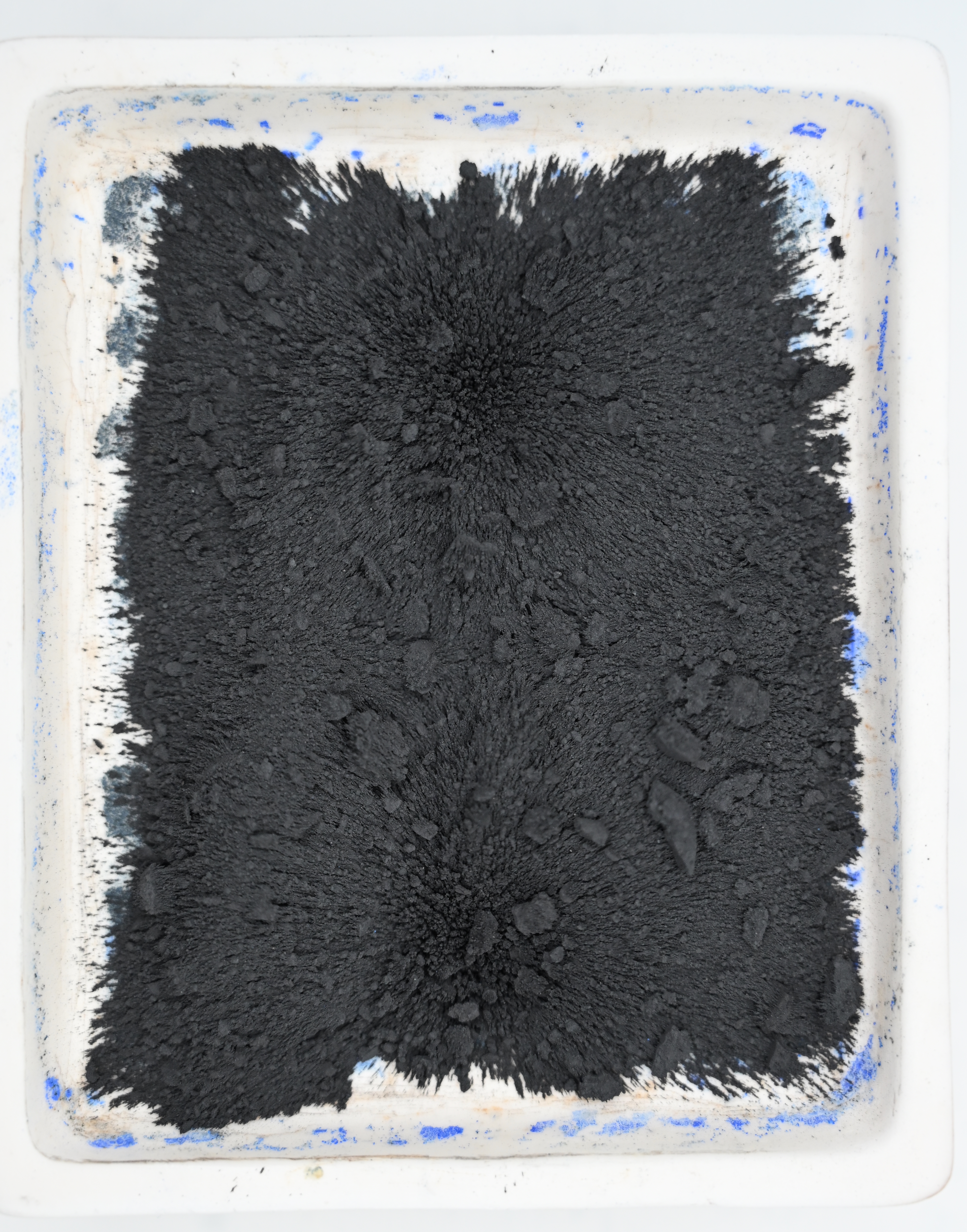
Copper Ferrite is a synthetic inorganic pigment belonging to the spinel family of mixed metal oxides. Chemically, it is copper iron oxide (CuFe₂O₄), crystallizing in the inverse spinel structure where Cu²⁺ ions occupy octahedral sites and Fe³⁺ ions are distributed between tetrahedral and octahedral sites. The deep brown-black color arises from intervalence charge transfer transitions between Fe²⁺/Fe³⁺ and Cu²⁺/Cu⁺ species, combined with d-d transitions of the transition metal cations within the oxide lattice.
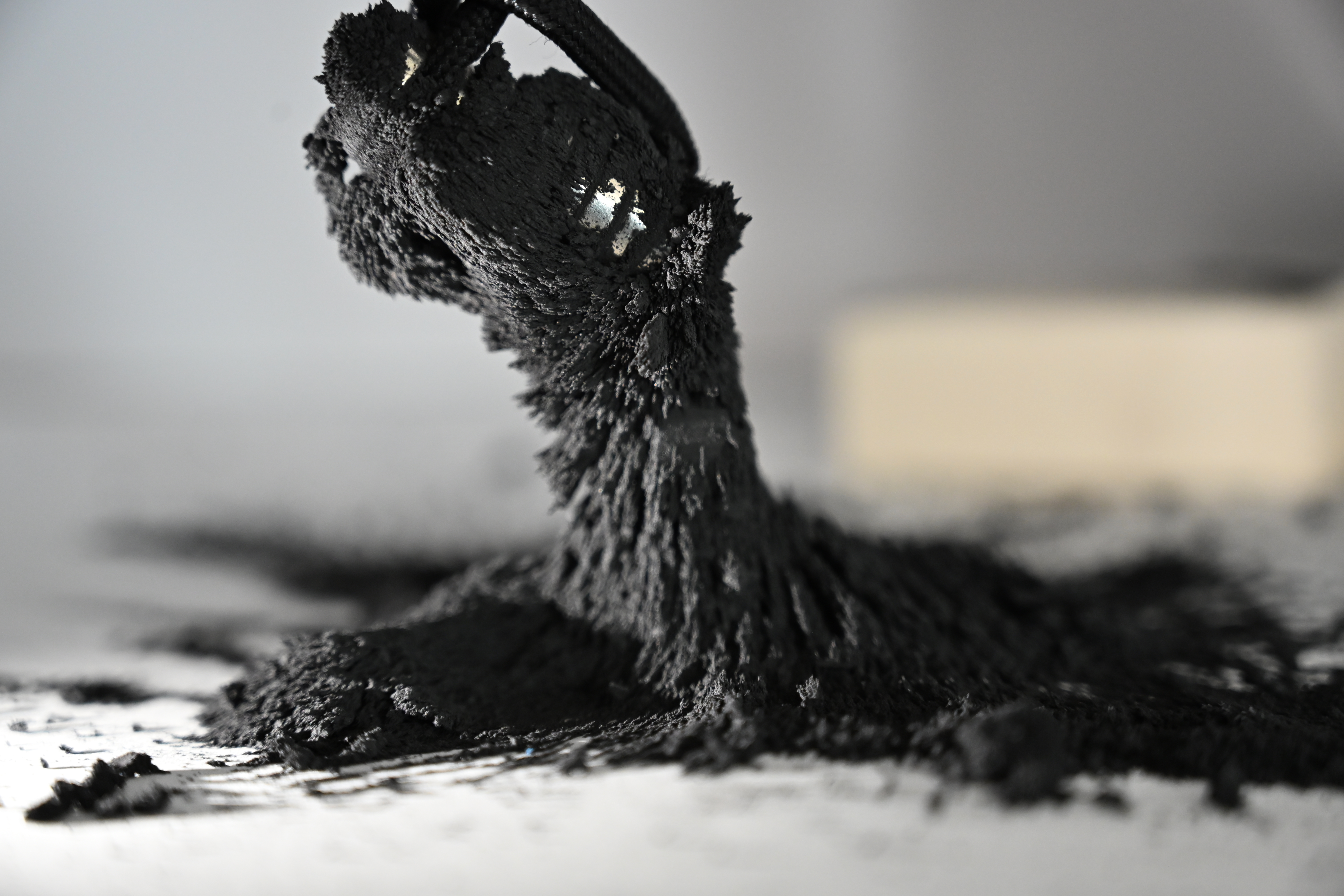
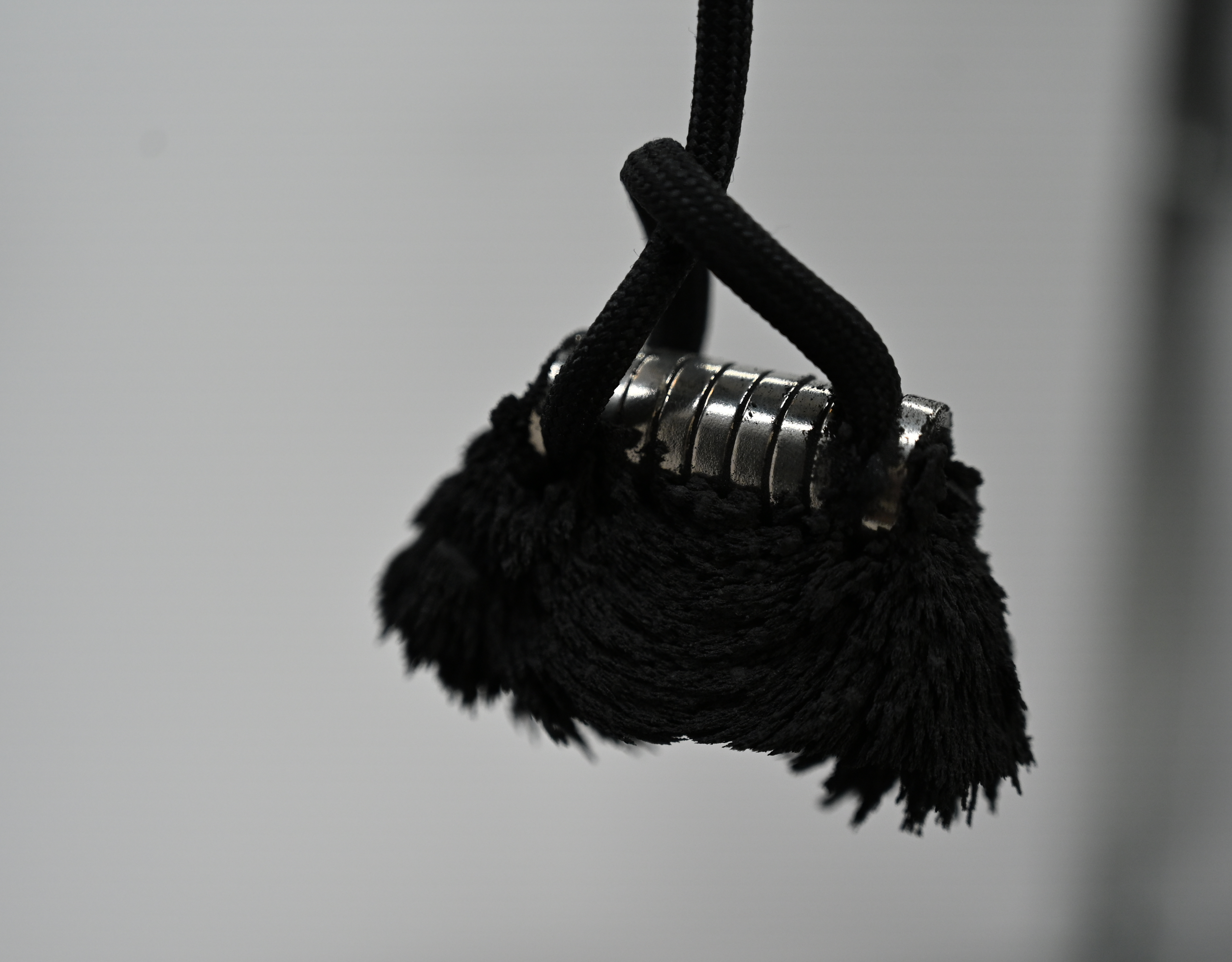
Spinel ferrites are characterized by exceptional thermal and chemical stability, making them suitable for high-temperature applications including ceramic glazes, glass coloring, and industrial coatings. Copper ferrite specifically exhibits ferrimagnetic behavior at room temperature, with a Curie temperature around 455°C, though its primary use in pigment applications relates to its optical properties rather than its magnetic characteristics.
The synthesis of copper ferrite typically involves solid-state reaction of copper oxide and iron oxide precursors at temperatures above 900°C, or alternatively through co-precipitation and calcination routes that can yield finer particle sizes. As a complex inorganic colored pigment (CICP), copper ferrite offers excellent lightfastness, weather resistance, and compatibility with a wide range of binder systems. Its opacity and tinting strength make it valuable for applications requiring durable, non-fading brown-black coloration.
safety
- GHS Classificationref
- Not classified as hazardous under CLP/GHS
- Hazardsref
- Inhalation (primary): respirable dust; mechanical eye/skin irritation; avoid ingestion
- Recommended PPEref
- N95 minimum; P100 for milling/transfers; nitrile gloves; safety glasses; lab coat
- Exposure Notesref
- Wet methods preferred; avoid dry sweeping; wash hands after handling
- Storageref
- Sealed container, cool/dry
- Disposalref
- Dispose as inorganic pigment waste per local regulations
ec data (coming soon)
The following measurements are pending elemental color laboratory analysis:
- GHS Classification
- Hazards
- Recommended PPE
- Exposure Notes
- Storage
- Disposal
- Chemical Formula
- Crystal Structure
- Particle Size
- Refractive Index
- Specific Gravity
- Phase / Identity
- Family
- Synthesis Class
- Hue Bias
- Opacity
- Scattering Regime
- NIR Response
- Fluorescence
- Oil Absorption
- Binder Compatibility
- Hardness
- Chemical Stability
chemical
- Chemical Formularef
- CuFe₂O₄
- Crystal Structureref
- Cubic (inverse spinel)
- Particle Sizeref
- 0.5–5 µm
- Refractive Indexref
- ~2.4
- Specific Gravityref
- 5.3–5.4
- Phase / Identityref
- CuFe₂O₄ (cuprospinel)
- Familyref
- Spinel ferrite
- Synthesis Classref
- Solid-state / calcination
optical
- Hue Biasref
- Black
- Opacityref
- Opaque
- Scattering Regimeref
- High
- NIR Responseref
- Absorbing
- Fluorescenceref
- None
physical
- Oil Absorptionref
- 15–25 g oil / 100 g pigment
- Binder Compatibilityref
- Compatible with all common binders (oil, acrylic, alkyd, silicate, cement, ceramic glazes)
- Hardnessref
- 6–6.5 Mohs
- Chemical Stabilityref
- Excellent; resistant to acids, alkalis, heat, and light
references
other sources
literature
Structural, magnetic and optical properties of copper ferrite nanoparticles (2016) 10.1016/j.ceramint.2016.04.115 Comprehensive study of CuFe₂O₄ nanoparticle synthesis and characterization including optical band gap measurements.
Magnetic properties of copper ferrite synthesized by sol-gel method (2007) 10.1016/j.jmmm.2007.03.019 Sol-gel synthesis route producing fine particles with controlled magnetic and structural properties.
thermal exposure & boundary conditions
photonic exposure (lightfastness)
photonic failure conditions
illumination dependence (metamerism)
binder/matrix interaction
documented anomalies
batch data
cf2
shipping
Feb 4, 2025
yield 92.0%
950°C peak
5.7h
- zero time
- Feb 4, 2025, 08:16 PM
- duration
- 5.7 hours
- location
- Falls Church, VA
charge
35.436g charge
synthesis
Elapsed-time log: 00:00 96C; 00:24 414C; 00:44 715C; 01:02 922C; 05:42 950C power off.
events
-
0.0h
Boat in / furnace zero-time (4:16P local).
-
1.0h
922C reached at 01:02 elapsed.
-
5.7h
950C; power off at 05:42 elapsed.